There are at least 2 ghats in Varanasi (we only saw two) where people are cremated. A ghat is a temple or at least a place for religious ceremonies at the bottom of some steps leading to a lake or river (in this case The Ganges).
In Varanasi, cremations are a central part of Hindu tradition. Many Hindus believe that dying or being cremated in Varanasi, especially at Manikarnika or Harishchandra Ghat, brings moksha—release from the cycle of rebirth. There are a number of what you might call care homes in Varanasi where people come to spend their last days knowing they will end in a Varanasi cremation .
Cremations happen 24 hours a day, following rituals led by the Dom community, who manage the sacred fires. Bodies arrive wrapped in cloth, are dipped in the Ganges, then placed on wood pyres. Families watch the rites, which are considered sacred rather than morbid. Photography is not allowed out of respect but is allowed from a distance.
The atmosphere is intense, spiritual, and deeply significant to Hindu belief.
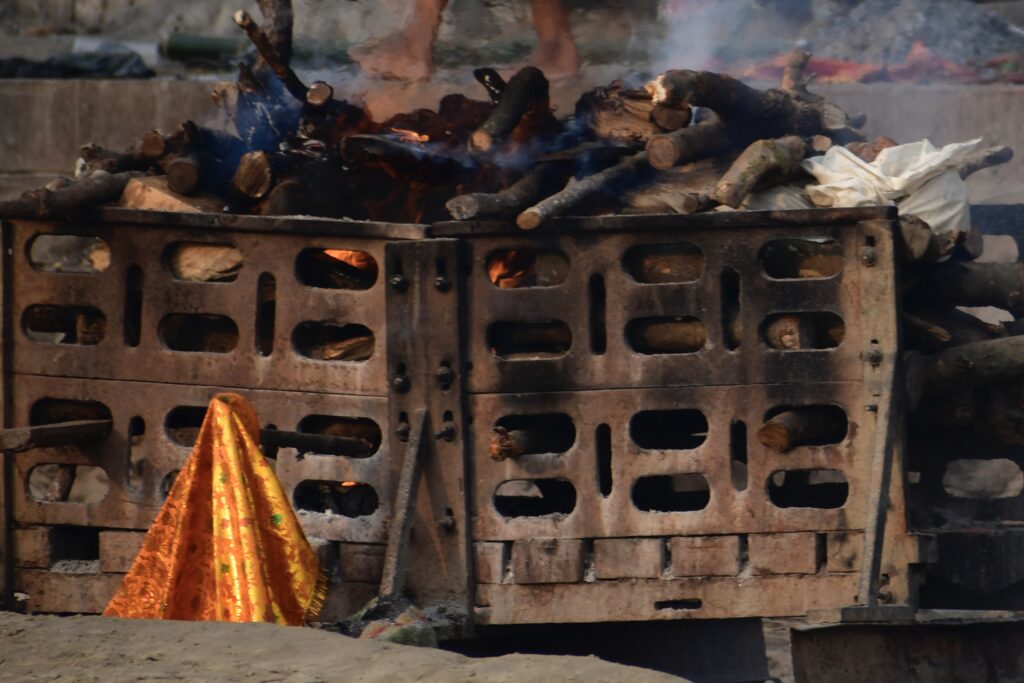
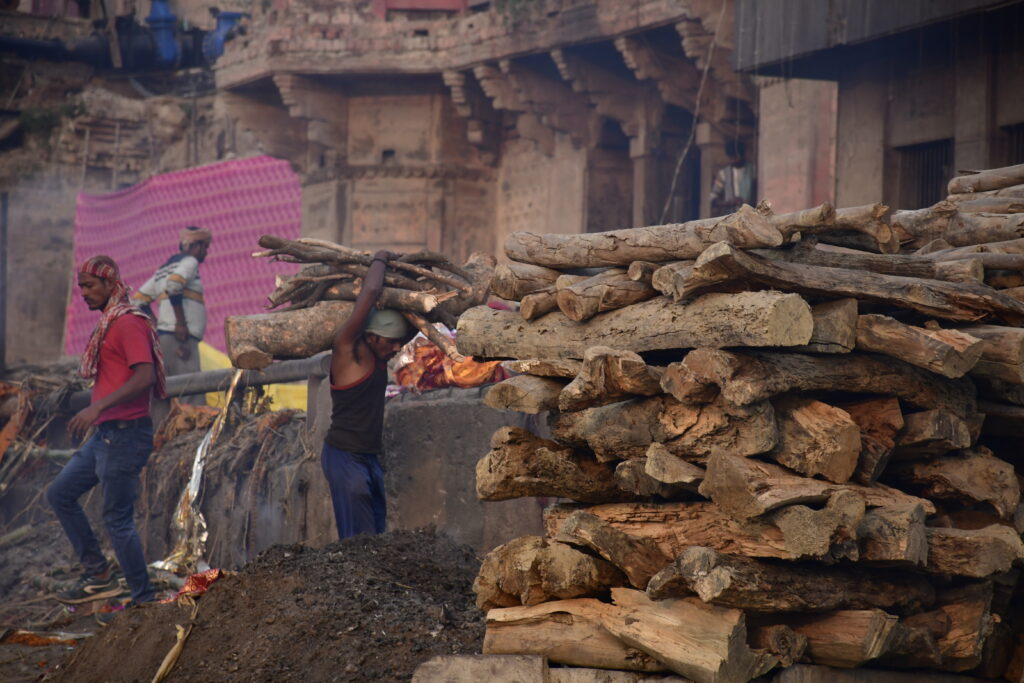
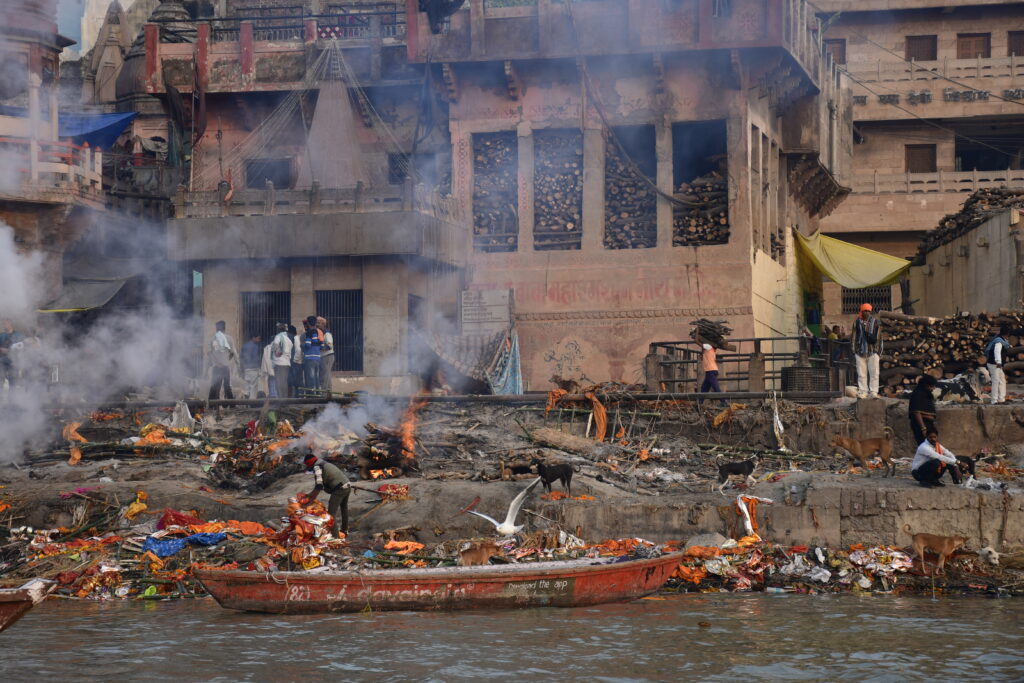
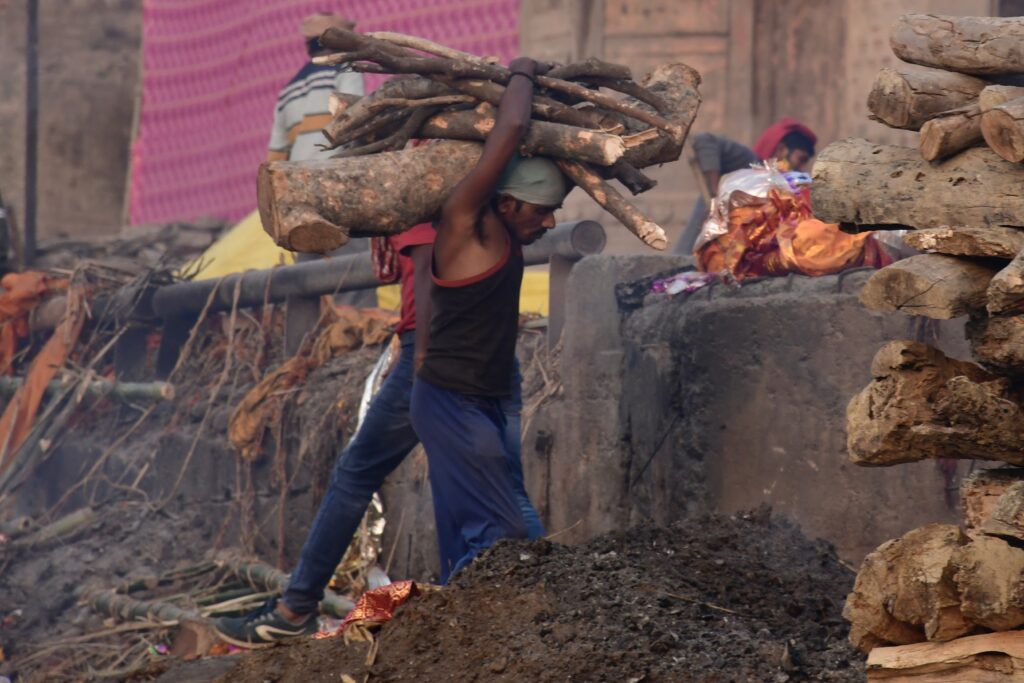
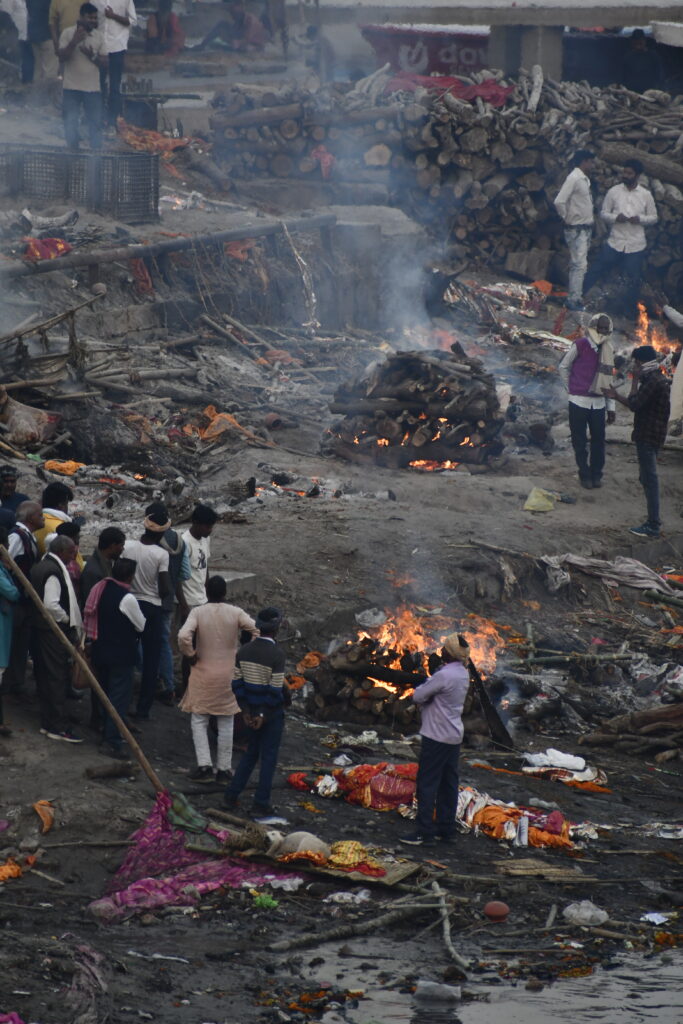
After the cremation the ashes are put into The Ganges. Any larger remains also go to the river. There is no other storage of remains. Cremation takes 2-3 hours.